Operated by Komodo Luxury
 Komodo National Park
Manta Ray Komodo: Snorkel & Dive Tours
Explore Komodo National Park's waters for reef manta rays and marine life with our experienced local guides.
Find Your Manta Ray Tour
Explore options for snorkeling and diving with manta rays in Komodo National Park.
Planning a trip to see manta rays in Komodo National Park requires understanding the local conditions and logistical arrangements. Labuan Bajo, on Flores, serves as the primary gateway, with boats departing from its harbour to various marine sites. This guide provides practical information for snorkelers and divers looking to encounter manta rays, covering seasonal considerations, site specifics, and how Komodo Luxury can assist in arranging your visit.
Overview of Manta Ray Encounters in Komodo
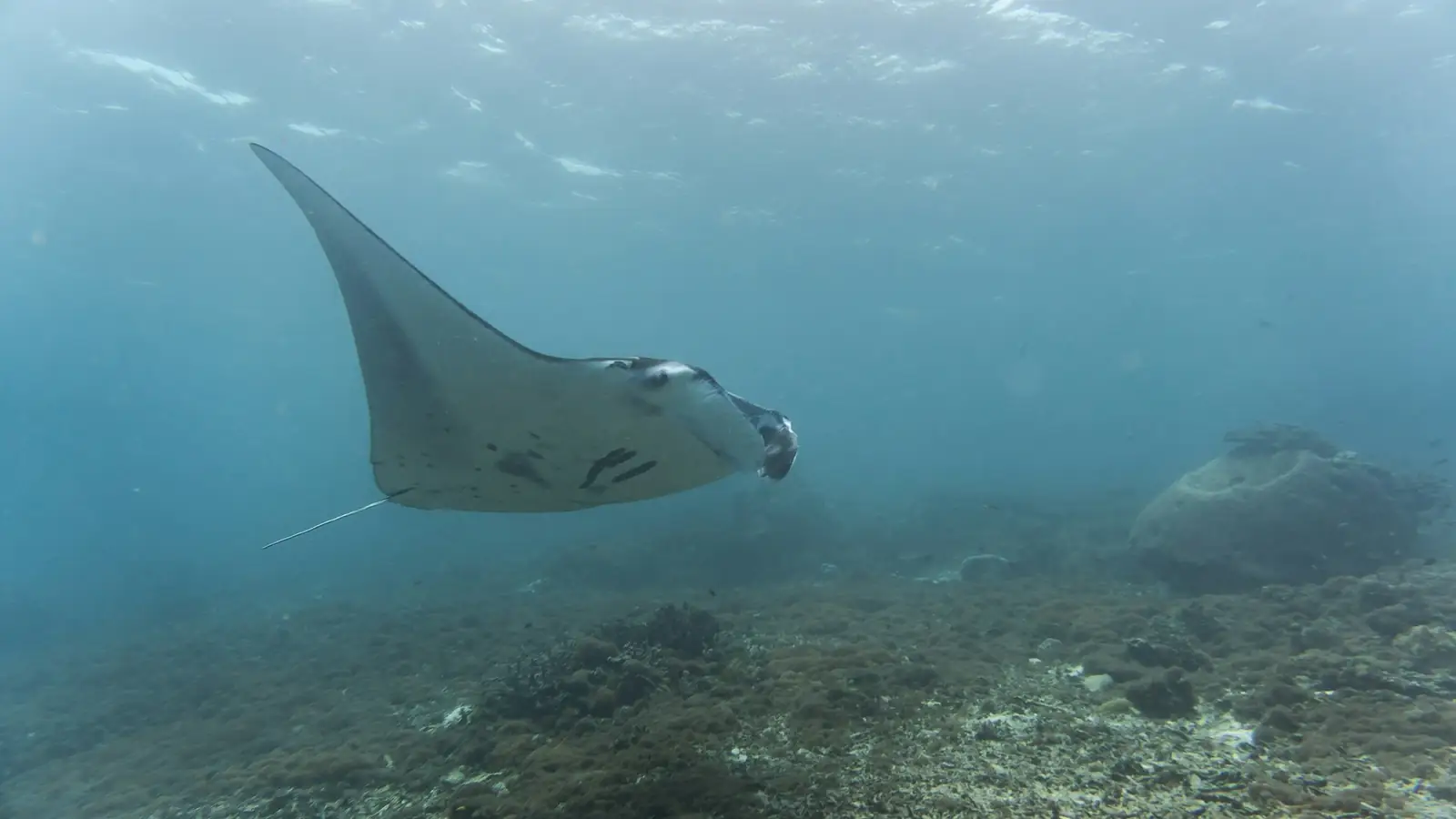
Komodo National Park is a significant marine protected area known for its reef manta rays. These animals are commonly found at cleaning stations and feeding grounds within the park’s waters. Karang Makassar, widely known as Manta Point, is a prominent shallow reef area where manta rays often gather. Other sites, such as those around Manta Alley, are also frequented by dive boats. It is important to confirm the exact manta site with your operator, as “Manta Point” can refer to different locations. The park’s waters support a diverse ecosystem, including coral reefs, reef fish, sharks, and turtles, alongside the mantas. Sightings are a wildlife encounter, meaning they are not guaranteed. Factors like weather, tides, and plankton availability influence manta movements and visibility. Reef manta rays are the species commonly encountered here, identifiable by their distinct ventral markings, though guides typically make the final identification.
Planning Your Manta Ray Komodo Trip: Best Times to Visit
The best season for visiting Komodo National Park for general cruising, trekking, snorkeling, and diving is generally reported as April to November. During these months, the weather tends to be clearer, and sea conditions are often more favourable for boat travel. However, productive manta encounters can also occur from December to February. It is worth noting that these latter months may bring rougher seas and more challenging crossings, which could affect access to certain sites. If you are asking, “can I see manta rays in Komodo in August?”, the answer is yes, as August falls within the generally favourable period. Similarly, “can I see manta rays in Komodo in September?” and “can I see manta rays in Komodo in October?” are also affirmative, with these months typically offering good conditions. For those wondering, “can I see manta rays in Komodo in November?” and “can I see manta rays in Komodo in December?”, sightings are possible, but December may present more variable sea conditions. Always confirm local conditions closer to your travel dates.
Getting to Komodo and Accessing Manta Sites
Your journey to see manta rays in Komodo begins by flying into Komodo Airport (LBJ) at Labuan Bajo, West Manggarai Regency, Flores. From Labuan Bajo harbour, you will depart by an authorized day boat, speedboat, or liveaboard vessel. Marine sites are exclusively reached by boat. Travel time to manta sites like Karang Makassar depends on the vessel type, prevailing sea state, the chosen route, and the specific site. For example, central dive sites are often 60-90 minutes from the harbour by a dedicated dive speedboat. A one-day speedboat trip from Labuan Bajo typically involves several hours of continuous boat travel. It is common for operators to combine Manta Point with visits to Padar Island, Pink Beach, or Komodo dragon sites, rather than booking it as a standalone transfer. “Can I snorkel with manta rays near Flores?” Yes, the primary location for this is Komodo National Park, which is accessible from Labuan Bajo on Flores. “Where are manta rays found around Flores?” They are predominantly found within the waters of Komodo National Park.
Komodo National Park Regulations and Fees
Visiting Komodo National Park requires an entry ticket or permit, and specific activities like snorkeling or diving may incur separate charges. As of 2026, advance booking through the park’s SiOra system or a registered operator is reported, with ticket availability and site quotas needing verification before payment. Published 2026 fee figures vary, with one guide reporting IDR 250,000 per international visitor per day, plus a IDR 25,000 harbour fee and IDR 25,000 per-person snorkeling/diving charge. Other sources mention different domestic rates, conservation charges, or package totals. All prices should be treated as provisional and confirmed locally with Balai Taman Nasional Komodo or your authorized operator. Some 2026 reports also state that admission is tied to the date printed on the e-ticket and that quotas may be confirmed during registration. This information should be checked directly before travel. These regulations are in place to manage visitor impact and protect the park’s unique ecosystem, including the manta rays.
Choosing Your Manta Ray Komodo Boat Trip
When selecting a boat trip for manta ray encounters, consider the duration and type of experience you prefer. A one-day speedboat trip from Labuan Bajo typically departs early, around 05:30–06:00, and returns by 18:00–19:00. This schedule can involve roughly 3–4 hours of travel each way, limiting time at manta sites. For a more relaxed experience, shared liveaboards commonly offer 3 days/2 nights or 4 days/3 nights, using traditional phinisi boats with cabins and meals. Certified divers often opt for dedicated dive day trips for 2–3 dives, or longer dive liveaboards. “How many guests should be on a Komodo manta boat?” This depends on the boat type and your preference for group size; smaller groups can offer a more personal experience. Operators should provide details on their boat’s capacity and guest-to-guide ratio. Public 2026 pricing examples include IDR 1,450,000 per person for a one-day speedboat snorkeling trip, and IDR 2,600,000–3,950,000 per person for a 2–3-dive day trip. Liveaboard prices start around IDR 4,500,000 per person for a 3D/2N shared sailing. Private charters are also available, with public 2026 listings quoting IDR 120,000,000 for 2D/1N. Always request a written, date-specific quotation.
Safety and Etiquette for Manta Ray Encounters
Safety is paramount when encountering manta rays in Komodo. Manta sites like Karang Makassar and exposed channels can have strong currents, surge, and boat traffic. Snorkelers should always use a surface marker or brightly visible flotation where appropriate, enter the water only after the boat crew gives clearance, and never drift away from the vessel. Stay with your group and follow your guide’s instructions. Divers must be comfortable with current, negative entries, drift procedures, and controlled ascents. Carry appropriate exposure protection, a surface marker buoy, and redundant signaling equipment. Operators should brief emergency procedures and nearest recompression/medical arrangements. Regarding etiquette, never touch, chase, block, or ride mantas. Maintain a respectful distance, avoid surrounding a stationary animal, and allow the manta to choose its direction. Do not use flash photography close to mantas. Follow all park rules, including not standing on or touching coral, and not feeding marine life. These guidelines help protect both visitors and the manta rays.
What is Cauldron Manta Site Komodo?
The “Cauldron” is a specific dive site in Komodo National Park, known for its strong currents and rich marine life, including manta rays. It is located in the northern part of the park, near Gili Lawa Darat. This site is particularly famous among experienced divers for its “washing machine” effect created by the converging currents, which brings in abundant nutrients and attracts pelagic species. While it is not one of the primary, more accessible manta sites like Karang Makassar (Manta Point), it is a known location where manta rays can be encountered, especially by divers. “What is Cauldron Manta Site Komodo?” It is a challenging dive site characterized by strong currents, often described as a channel or drift dive, where the unique topography and water movement create an environment attractive to manta rays and other large marine animals. Due to the strong currents, diving at the Cauldron requires good buoyancy control and experience with drift diving. It is generally not a snorkeling site. For snorkelers, Karang Makassar is the more common and suitable location for manta ray sightings.
Questions to Ask Your Komodo Dive Operator
Before booking, it’s essential to ask specific questions to ensure a safe and suitable experience. “What questions should I ask a Komodo dive operator?” Enquire about their boat’s condition, passenger capacity, and safety equipment, including life jackets, first-aid supplies, and emergency communications. Ask about the guide-to-guest ratio, especially for diving, and confirm if the operator is properly licensed. For divers, clarify the dive sites planned, whether they match your certification level, and what their policy is for changing sites due to weather or current. Confirm what is included in the price, such as park fees, harbour fees, hotel pickup, lunch, wetsuit, fins and mask, dive equipment, tanks, and guide. Ask about their cancellation policy, especially concerning weather. For liveaboards, inquire about cabin types, meals, and the itinerary. Also, clarify the languages spoken by the guides. “What languages do manta ray guides in Labuan Bajo speak?” Many guides are multilingual, but it is wise to confirm if they can communicate effectively in a language you understand, particularly for safety briefings.
Komodo Luxury: Your Partner for Manta Ray Encounters
Komodo Luxury, operating since 2015, specializes in arranging comprehensive trips to Komodo National Park, including dedicated manta ray encounters. We understand the complexities of planning a trip to this region, from navigating park regulations to ensuring a safe and enjoyable experience. Our team can assist with various trip types, whether you prefer a one-day speedboat adventure, a multi-day liveaboard experience on a traditional phinisi, or a dedicated dive trip. We help clarify what prices include, such as park fees, harbour fees, and equipment. Our reservations team can confirm details on boat condition, passenger capacity, safety equipment, and guide-to-guest ratios. We can also provide information on seasonal conditions and help you plan around factors like wind, swell, and visibility, which can impact manta site access. For detailed enquiries and bookings, our Komodo Luxury reservations team is available directly via WhatsApp at +62 811-3823-875 and sales@komodoluxury.com. We aim to provide clear, specific information to help you plan your manta ray Komodo adventure.
Important Considerations for Your Komodo Trip
Several practical points can enhance your visit. Carry Indonesian rupiah in small denominations for tips, snacks, and unexpected fees, as mobile coverage can be intermittent offshore, and card payments may not work. Early departures are common and often reduce heat and congestion, potentially improving manta sightings before wind and surface chop increase. Be aware of Komodo’s strong tidal currents; follow your guide’s instructions. Avoid common mistakes such as underestimating travel distances on day trips or booking a generic “Komodo tour” if you are a certified diver needing specific arrangements. Mantas are wild animals, and sightings are never guaranteed. Always bring certification evidence for diving and disclose medical conditions. Avoid single-use plastic by refilling water bottles and packing out all rubbish. Finally, always ask for a written, date-specific quotation, as prices for fuel, park charges, boat category, season, and group size can change the final cost. For more detailed information on park fees, refer to Komodo National Park Fees & Permits 2026.
Ready to plan your manta ray Komodo adventure? Contact the Komodo Luxury reservations team directly for specific details, availability, and a tailored quotation for your trip. Reach us on WhatsApp at +62 811-3823-875 or email sales@komodoluxury.com. We look forward to assisting you. Get in touch today.